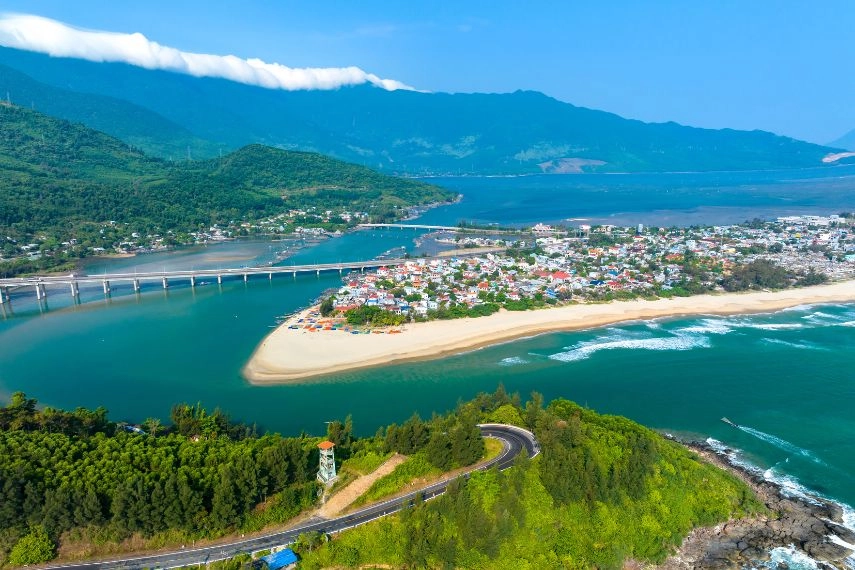
Lang Co Bay
The train skirts the edge of this lagoon, characterized by its calm turquoise waters and surrounding sandbars. Look for the contrast between the mountain slopes and the ocean.
Sit on the right side from Hue for direct water views.

The rail route between Hue and Da Nang crosses the Hai Van Pass, a stretch of track that skirts the coastline before climbing into the Truong Son mountain range. This guide covers daily operations, scenery windows, and the logistics that shape the journey.

Quick answer
The hai van pass train hue to da nang operates daily from 07:00 to 18:00, with trains departing Hue Railway Station at 02 Bui Thi Xuan Street and arriving at Da Nang Railway Station at 791 Hai Phong Street. Rail fare is free for entry purposes; ticket cost applies only to the train journey itself. Daylight departure between 07:00 and 15:00 is recommended to view the coastal scenery as the train crosses the pass.
The Hai Van Pass railway section remains one of the few stretches of the Reunification Express where the track still follows the original French colonial alignment. While most north-south rail traffic now uses the inland tunnel opened in 2005, select services continue along the coastal route, threading through twenty tunnels and hugging cliffsides above the East Sea. The hai van pass train hue to da nang covers 108 kilometers in roughly three hours, though the pass itself occupies only the middle third of the route. Departure from Hue threads through the Perfume River delta before the track begins its ascent at Lang Co Bay. The train climbs to 496 meters at the pass summit, where the Truong Son range meets the sea. Northbound and southbound services share a single-track alignment through the pass, with passing loops at stations to manage opposing traffic. Visibility from the carriage windows depends on departure time and weather; morning light favors eastward coastal views, while afternoon sun backlights the ridgeline. The heritage train designation refers to the route's preservation status rather than a dedicated tourist service. Standard carriages carry both travelers and commuters, and seating is assigned by ticket class rather than view preference. The railway alignment was completed in 1936 and required seventeen years of construction through unstable geology. Several tunnels retain their original masonry portals, though track and signaling infrastructure have been modernized. The route's continued operation serves Lang Co and several coastal villages that lack direct road access to either city. Departure frequency varies by season, with four to six services daily in each direction. The coastal scenery requires natural light, making early and midday departures preferable for the hai van pass train hue to da nang. Late afternoon services complete the pass section near dusk, reducing visibility through the key viewing segments. Station facilities at both Hue and Da Nang include ticket counters, waiting halls, and platform access, though neither station offers dedicated tourist services or English-language signage beyond basic directional markers.
“The track climbs to 496 meters where the Truong Son range meets the sea, threading through twenty tunnels along the original French colonial alignment.”
The best arrival window is 07:00–15:00, as daylight is essential to view the Hai Van Pass scenery. Choosing a clear day during the dry season ensures visibility of the coastline and mountain curves.
Sunny and warm (25°C–35°C)
Clear skies provide the best visibility for coastal views. Mornings often feature calmer winds and lower humidity.
Rainy and cool (18°C–25°C)
Expect frequent rain and potential mist, which may obscure mountain visibility. Rail services may occasionally adjust schedules due to weather.
—
Traveling on weekdays helps avoid higher volumes of weekend passengers. Early morning departures offer the highest probability of clear, stable light for photography.
Verdict: The best time to travel is during the dry season from March to August, specifically on weekday mornings between 07:00 and 11:00 for optimal visibility.
The station facilities for the Hai Van Pass train route operate daily throughout the week. Passengers may access services during the following set hours.
There is no entrance fee for accessing the railway stations or the transit route itself. Rail travel costs are determined solely by official Vietnam Railways fare structures based on seat class and train type.
Verdict: The total cost for the journey is limited to your official rail fare, which fluctuates based on the specific carriage and seat type you select.
The rail journey connects Hue Railway Station and Da Nang Railway Station, both located in central urban areas easily accessible by local transport. Travelers should plan to arrive at these primary transport hubs well before their scheduled departure time.
Direct to Hue Railway Station (02 Bui Thi Xuan Street)
Route 01 to Hue Railway Station
Direct to Da Nang Railway Station (791 Hai Phong Street)
Route 06 to Da Nang Railway Station
For both stations, use the main entrance designated for passengers. Arriving at the station early ensures sufficient time to navigate the platforms before boarding.
Securing a seat on the Hai Van Pass train requires advance booking through the official railway portal or authorized agents, followed by platform check-in at least 30 minutes before departure. The entire process from booking to boarding takes 15–20 minutes if completed online, or 45–60 minutes if purchasing at the station counter.
Visit https://dsvn.vn or contact +84 1900 6469 to reserve seats at least 24 hours before travel. Many travelers arrive at the station expecting walk-up availability and find departures full, especially during peak season.
Choose a train leaving between 07:00 and 15:00 to ensure you pass through Hai Van in full daylight. Late-afternoon departures reduce visibility of the coastal scenery the route is known for.
Reach Hue Railway Station (02 Bui Thi Xuan Street) or Da Nang Railway Station (791 Hai Phong Street) at least 30 minutes before departure. Platform numbers are posted 15 minutes prior, and late arrivals risk missing boarding even with valid tickets.
Check your ticket for the carriage number and position yourself near the corresponding platform marker. Carriages are labeled sequentially, but signage is sparse—ask station staff if uncertain rather than boarding the wrong car.
Enter through the designated door, place luggage in the overhead rack or end-of-carriage storage, and take your numbered seat. Aisles narrow quickly once passengers settle, so stowing bags promptly avoids blocking others.
The rail journey between Hue and Da Nang traverses the Hai Van Pass, offering a transition between lush mountain landscapes and the coastline of the East Sea. Passengers experience a sequence of distinct geographical features as the train navigates the mountain contours.
The train skirts the edge of this lagoon, characterized by its calm turquoise waters and surrounding sandbars. Look for the contrast between the mountain slopes and the ocean.
Sit on the right side from Hue for direct water views.

The tracks follow the steep cliffs of the Truong Son range, providing high-altitude perspectives of the coastline. The route features tunnels cut directly into the rock face.
Watch the track curve to photograph the engine train.

As the train approaches Da Nang, this area reveals unique rock formations and traditional fishing boats anchored near the shore. These reefs are visible during low tide segments of the trip.
Observe the shoreline closely as the train descends.
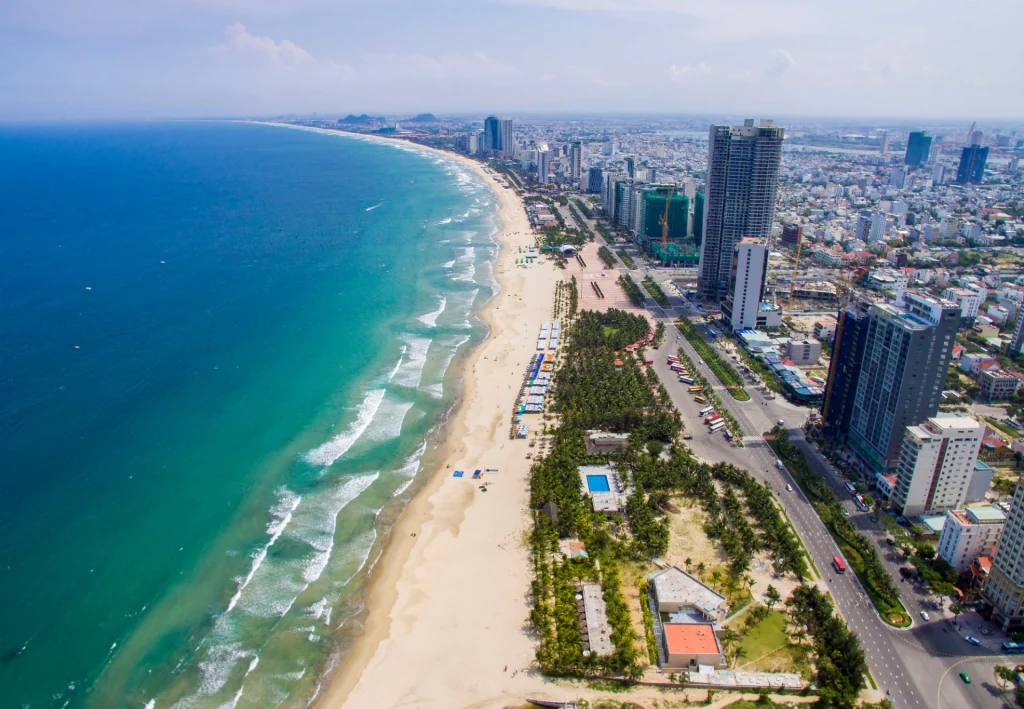
The final approach into the city provides views of the sandy beaches and the growing urban skyline. This segment offers a perspective of the port and the regional topography.
Look toward the horizon for the city skyline arrival.
Everything you need to know about hai van pass train hue to da nang
You can reserve your seat through the official website at https://dsvn.vn. This platform manages all scheduling and availability for the hai van pass train hue to da nang route.
There is an entrance fee of 0 VND for the station grounds, meaning your costs are strictly limited to the rail fare. The platform does not sell tickets directly but provides access to the official booking channel.
To fully enjoy the coastal vistas, you should plan your trip between 07:00 and 15:00. Daylight is essential for viewing the landscape while traveling on the hai van pass train hue to da nang.
The Hue station is located at 02 Bui Thi Xuan Street, while the Da Nang station is found at 791 Hai Phong Street. These terminals serve as the primary hubs for the hai van pass train hue to da nang service.
Children are welcome to travel on this rail line, making it a viable option for families exploring central Vietnam landmarks. Ensure you check child fare policies directly on the official booking site during your reservation process.
Yes, the route offers expansive views of the coastline and mountain terrain as the locomotive traverses the pass. It is widely considered one of the most scenic rail corridors in the region.
You may reach out to the railway service for inquiries by calling +84 1900 6469. This line provides assistance regarding schedules and operational updates.