
English| EUR
Suggested for you
More currencies
Choose a language
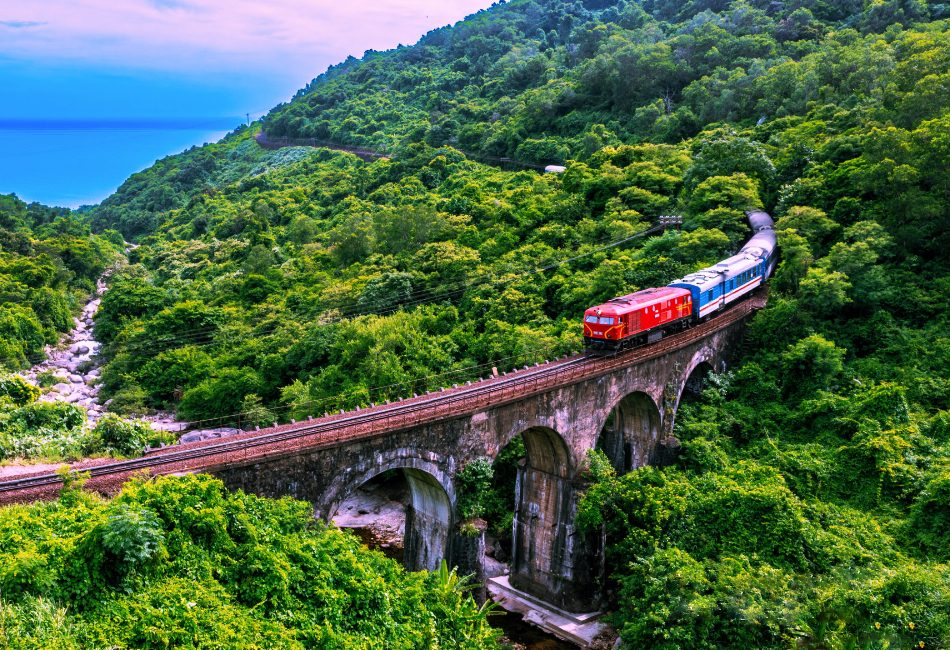
The Heritage Train follows the original coastal railway between Da Nang and Hue, skirting the shoreline before climbing inland through mountain tunnels. The motorbike route crosses Hai Van Pass itself—a mountain road that climbs to 496 meters above sea level. Both connect the same cities, but they offer entirely different perspectives on Central Vietnam's geography.
Quick answer
The Heritage Train runs along the coast and through tunnels beneath the Truong Son range, departing Da Nang Railway Station daily between 07:05 and 18:15, with tickets priced at 300,000 VND per person for a single one-way journey. The motorbike route crosses the Hai Van Pass summit via Highway 1A, a winding mountain road exposed to weather and traffic, requiring rider experience and suitable road conditions. The train delivers a seated, climate-controlled journey; the motorbike demands active navigation and physical stamina.
The Heritage Train between Da Nang and Hue operates on the original French colonial railway, completed in 1936 and engineered to hug the coastline rather than challenge the Truong Son mountains head-on. The route skirts Lang Co Bay, crosses the Hai Van Tunnel approach, and threads through lower foothills before descending into Hue's river plain. Passengers sit in air-conditioned carriages with fixed departure times, insulated from weather, traffic, and the physical demands of piloting a vehicle. The motorbike alternative—crossing Hai Van Pass via the old Highway 1A—puts the rider in direct contact with elevation, weather, and road geometry. The pass climbs steeply from sea level to 496 meters over a series of switchbacks, with no shade, limited fuel stations, and exposure to sudden fog or rain. The summit offers panoramic views across the South China Sea and Da Nang peninsula, but the descent toward Hue requires sustained concentration on steep gradients and tight corners. Riders need experience handling mountain roads, functioning brakes, and contingency planning for mechanical issues or weather changes. Choosing between hai van pass train or motorbike comes down to physical capability, weather tolerance, and how much control you want over pacing and stops. The railway delivers a fixed schedule and a passive journey; the road offers flexibility and immersion but requires you to manage risk, fuel, and fatigue. Neither route is universally superior—the train suits travelers prioritizing comfort and reliability, while the motorbike appeals to experienced riders prepared for mountain conditions and self-sufficient navigation. Both options connect Da Nang and Hue within a similar timeframe, but the experiences diverge sharply. The train journey emphasizes coastal scenery framed through windows, with departure punctuality and ticketed entry managed at railway stations. The motorbike journey centers on rider agency, direct exposure to landscape and elements, and the responsibility of vehicle operation across challenging terrain. Understanding what each route demands—and what it excludes—ensures the choice aligns with your skill level, weather forecast, and travel priorities.
“The railway delivers a fixed schedule and a passive journey; the road offers flexibility and immersion but requires you to manage risk, fuel, and fatigue.”
The Heritage Train service between Da Nang and Hue operates on a consistent daily schedule throughout the week. Travelers can coordinate their transit plans according to these established hours.
Accessing the Heritage Train service requires departing from the primary railway stations in Da Nang or Hue. Both locations are centrally situated and accessible via various local transport options.
Direct to Da Nang Railway Station, 791 Hai Phong Street
Direct to Hue Railway Station, 02 Bui Thi Xuan Street
Local streets surrounding Da Nang or Hue stations
Plan to arrive at the station within the best arrival window of 07:05–17:45 to ensure adequate time for check-in and platform access. Taxis are the most direct method to reach the station entrances at 791 Hai Phong Street in Da Nang or 02 Bui Thi Xuan Street in Hue.
The optimal window for traversing the Hai Van Pass occurs during the transition months of March to May and September to October, when visibility is highest and rainfall is minimal. Choosing early morning departures ensures clearer mountain views and lighter traffic for both train passengers and motorbike riders.
Dry, 25°C to 30°C. Ideal conditions for outdoor visibility and comfort.
Variable, 24°C to 29°C. Lower humidity with occasional clear skies.
—; Early starts avoid peak commuter traffic and provide the best light for photography.
Hot, 30°C to 35°C. Intense sun requires high levels of hydration and sun protection.
Verdict: The best slot for travel is weekday mornings between March and May, or September and October, to balance clear weather with manageable visitor numbers.
Prepare documentation and reservations ahead of time, especially if combining train travel with motorbike exploration of Hai Van Pass.
Everything you need to know about hai van pass train or motorbike
Choosing between a hai van pass train or motorbike depends on your preference for comfort versus adventure. The train offers a relaxed, panoramic view of the coastline, while the motorbike provides the freedom to stop and explore the mountain pass at your own pace.
You can secure your travel arrangements through the official site, dsvn.vn, to ensure a seat on your preferred date. This digital platform streamlines the process for those comparing the hai van pass train or motorbike options.
The entrance fee for a single one-way ticket on the Heritage Train service is 300,000 VND per person. Please note that this fee covers your rail transport between the two cities.
The train service operates daily from Monday through Sunday. The schedule runs from 07:05 to 18:15 each day.
When deciding between the hai van pass train or motorbike, consider that the rail route remains a reliable transport choice during inclement weather. Motorbike travel requires navigating winding coastal roads which may become hazardous during heavy rain or wind.
The Da Nang Railway Station is located at 791 Hai Phong Street, Da Nang. The Hue Railway Station is situated at 02 Bui Thi Xuan Street, Hue.